Cedar Shake Roof Maintenance: A Practical Guide for Ontario Homeowners
Welcome to WordPress. This is your first post. Edit or delete it, then start writing!
Cedar Shake Roof Maintenance: A Practical Guide for Ontario Homeowners
A cedar shake roof is one of the most durable and visually striking roofing options available – but it won’t stay that way without regular attention. In Ontario’s climate, where freeze-thaw cycles, humidity, and moss growth all work against wood roofing, maintenance isn’t optional. It’s what separates a shake roof that lasts 40 years from one that starts failing at 20.
This guide covers exactly what cedar shake maintenance involves, how often to do it, and what warning signs to watch for.
Cedar shakes vs cedar shingles: why maintenance differs
Cedar shakes are hand-split rather than machine-sawn, which gives them their characteristic thickness and textured surface. That texture is part of the appeal — but it also means more surface area for debris and moisture to accumulate. Shakes also have more natural variation in thickness and grain, which makes them slightly more susceptible to cracking under freeze-thaw stress if they dry out between treatments.
If your roof has the rugged, deeply textured appearance with visible grain variation, you have shakes. The maintenance principles are similar to shingles but the intervals and priorities differ slightly.
The Ontario maintenance challenge
Two main climate factors work against cedar shake roofs in Ontario:
Freeze-thaw cycles — Water gets into small gaps and surface checks in the wood, freezes, expands, and opens those gaps wider. Over many cycles this leads to splitting and accelerated decay. Keeping shakes treated with oil preservative reduces how much moisture they absorb in the first place.
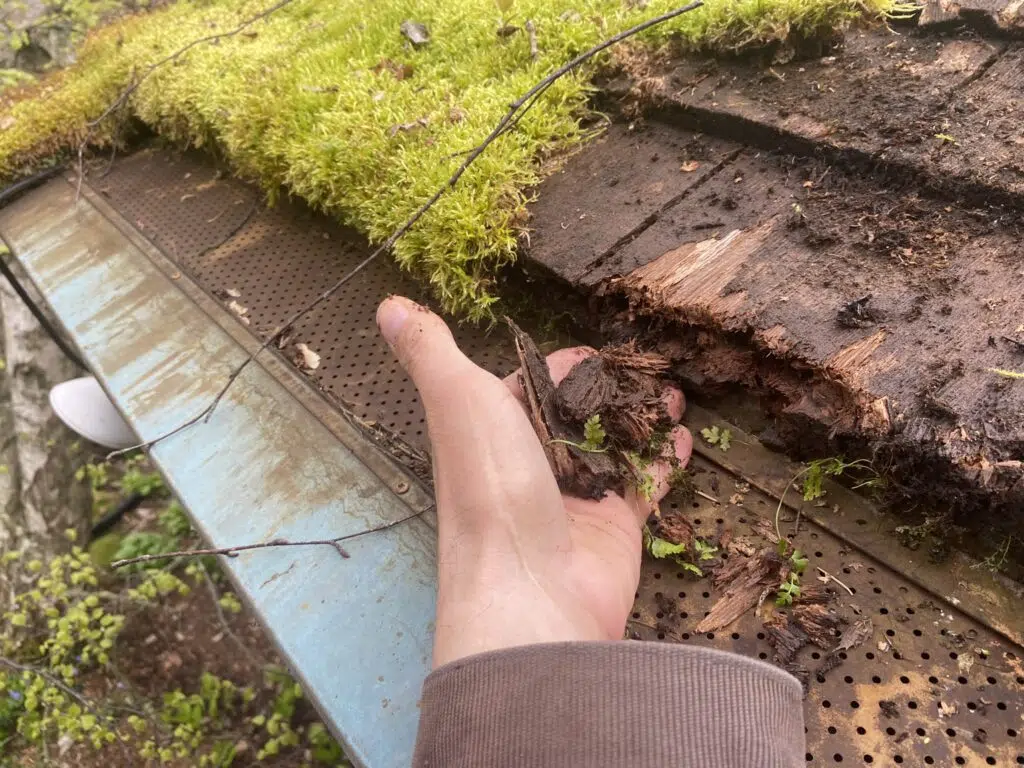
Moss and algae growth — More of an issue in the Niagara region and along the escarpment where humidity is higher and properties have more tree cover. Moss holds moisture against the wood surface continuously, which is far more damaging than rain exposure alone. Left untreated, it will significantly shorten the life of the roof.
Cedar shake maintenance schedule
Every year:
Visual inspection from ground level — look for cracked, missing, or heavily cupped shakes
Clear debris from valleys, gutters, and low-slope areas where leaves accumulate
Check that no tree branches are making contact with the roof surface
Every 2 years (or after major storms):
Professional inspection — a cedar specialist can identify early rot, failing flashing, and shakes that need replacement before they cause water ingress
Address any moss or algae growth with appropriate treatment
Every 4–5 years:
Full cleaning and oil preservative application — this is the single most important maintenance task for a cedar shake roof. The oil replenishes what the wood loses through weathering, keeping shakes flexible and resistant to moisture penetration. Skipping this is the most common reason shake roofs age prematurely.
Replace any cracked, split, or badly cupped shakes at the same time
What to watch for between maintenance visits
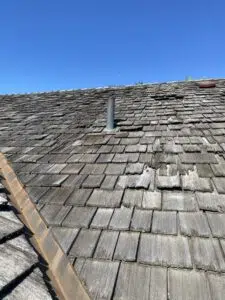
Cupping or curling – shakes that have lifted or bent, especially in sections rather than isolated shingles
Dark streaking – often moss, algae, or early decay rather than just weathering
Missing shakes – even one or two missing shakes can allow water into the roof structure quickly
Buildup in gutters – cedar doesn’t granulate like asphalt, so this is less of an indicator, but heavy cedar debris accumulation in gutters can signal shakes breaking down
Interior signs – water stains on ceilings or in the attic are a sign the roof has already been compromised somewhere
When maintenance isn’t enough
If more than 20–25% of your shakes are showing significant damage – widespread cracking, rot in multiple sections, or repeated leaks despite repairs – restoration or full replacement becomes the more cost-effective path. A professional inspection will tell you which side of that line you’re on.
If your cedar shake roof hasn’t been maintained in a few years, or you’re not sure what condition it’s in, the best starting point is an honest inspection from someone who knows cedar. JD Wood Revival has been maintaining and restoring cedar shake roofs across Southern Ontario and Muskoka since 1991.